Thursday, May 17, 2018
Tuesday, May 15, 2018
Power
Power
The rate of doing work is called 'power'. Unit of power is joule/second or watt (W) . 1kilowatt = 1kW= 10 raise to 3 W.
746W = 1 Horsepower(hp)
Kilowatthours is a unit used for large amounts of electrical work or energy.
kWh = 1000 watt hours
= 1000 / 3600 watt, second or joules
= 3,600,000 J = 3.6 MJ
We pay for Electricity in kilowatthour of energy,
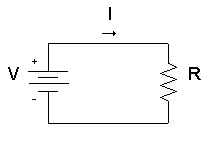
Power in watts = volt / amperes = V/I
Also P = I square R and P= V square / R
The rate of doing work is called 'power'. Unit of power is joule/second or watt (W) . 1kilowatt = 1kW= 10 raise to 3 W.
746W = 1 Horsepower(hp)
Kilowatthours is a unit used for large amounts of electrical work or energy.
kWh = 1000 watt hours
= 1000 / 3600 watt, second or joules
= 3,600,000 J = 3.6 MJ
We pay for Electricity in kilowatthour of energy,
Power in watts = volt / amperes = V/I
Also P = I square R and P= V square / R
DC Current Source
DC current source
A current source with infinite internal impedance is considered to be an ideal or constant current source. An ideal current source supplies a constant current to a load even if its impedance changes.
An ideal current source does not exist because any source cannot supply constant current even if its terminals are open-circuited.
A current source with infinite internal impedance is considered to be an ideal or constant current source. An ideal current source supplies a constant current to a load even if its impedance changes.
An ideal current source does not exist because any source cannot supply constant current even if its terminals are open-circuited.
Practical DC current source
Practically the current sources don’t have infinite resistance across them but has some finite and high resistance. Due to the finite resistance the practical current source shows some dependency on the voltage across it. So the current delivered by a practical current.

The current to delivered to the external circuit It is given by,
It=Is-(V/R)
It=Is-(V/R)
V-I characteristics
The below figure shows the V-I characteristics of a practical current source along with its comparison with the characteristic of ideal current source. The reduction of the current is due the internal resistance R.
DC Voltage and Current Sources

DC voltage source
The term DC is used to refer to power systems that use only one polarity of voltage or current, and to refer to the constant, zero-frequency, or slowly varying local mean value of a voltage or current. For example, the voltage across a DC voltage source isconstant as is the current through a DC current source.
Practical DC voltage source
A practical voltage source can be considered to consist of an ideal source in series with a resistance.This is 'internal resistance' of the source.In case of ac voltage source it is internal impedance.
Internal Impedance of a Source
Any source that produces voltage output continuously is a generator.All sources or generator have an internal resistance or impedance in case of an ac source.The internal impedance of a source may be due to following reasons-
1.The resistance of the wire or armature winding in an alternator or dc generator.
2.The output impedance of transistor or vacuum tube in rectifier, oscillator or signal generator.
3.The resistance of the electrolyte between electrode in a chemical cell.
The voltage available at the terminal of a voltage source is its terminal voltage. Due to the internal impedance,the terminal voltage drops when the voltage source supplies power to a load. But when load is not connected, there is no load current. With no current, the voltage drop across internal impedance is zero. Then the full generated voltage is available across the output terminal.This value is open circuit voltage or no-load voltage.
A open circuit voltage is 1.5 V. Load resistance of 0.85 Ohm is connected to the source. Internal
resistance of a source is 0.15 Ohm.
Total resistance = 0.85 + 0.15 = 1 Ohm = R
The current in the circuit

=1.5 A
Terminal voltage = V(AB)= V(RL)= I / R(L)
=1.5/0.85= 1.275V
The voltage drop because of internal resistance is
=1.5 - 1.275 =0.225V
The terminal voltage drop as the load current increases. The terminal voltage is less than its open-circuit voltage due to the internal resistance. If there is a short circuit across the source,
its internal resistance prevents the current from becoming infinitely high.
Any source that produces voltage output continuously is a generator.All sources or generator have an internal resistance or impedance in case of an ac source.The internal impedance of a source may be due to following reasons-
1.The resistance of the wire or armature winding in an alternator or dc generator.
2.The output impedance of transistor or vacuum tube in rectifier, oscillator or signal generator.
3.The resistance of the electrolyte between electrode in a chemical cell.
The voltage available at the terminal of a voltage source is its terminal voltage. Due to the internal impedance,the terminal voltage drops when the voltage source supplies power to a load. But when load is not connected, there is no load current. With no current, the voltage drop across internal impedance is zero. Then the full generated voltage is available across the output terminal.This value is open circuit voltage or no-load voltage.
A open circuit voltage is 1.5 V. Load resistance of 0.85 Ohm is connected to the source. Internal
resistance of a source is 0.15 Ohm.
Total resistance = 0.85 + 0.15 = 1 Ohm = R
The current in the circuit
=1.5 A
Terminal voltage = V(AB)= V(RL)= I / R(L)
=1.5/0.85= 1.275V
The voltage drop because of internal resistance is
=1.5 - 1.275 =0.225V
The terminal voltage drop as the load current increases. The terminal voltage is less than its open-circuit voltage due to the internal resistance. If there is a short circuit across the source,
its internal resistance prevents the current from becoming infinitely high.
The Electrical Circuits And Electrical Units
Electricity- Electricity is the presence and flow of electric charge. Its best-known form is the flow of electrons through conductors such as copper wires. ... When the charges are not moving, electricity is called static electricity. When the charges are moving they are an electric current, sometimes called 'dynamic electricity'.
Electric charge-Electric charge is the physical property of matter that causes it to experience a force when placed in an electromagnetic field. There are two types of electric charges; positive and negative (commonly carried by protons and electrons respectively). Like charges repel and unlike attract.
Current-An electric current is a flow of electric charge. In electric circuits this charge is often carried by moving electrons in a wire. It can also be carried by ions in an electrolyte, or by both ions and electrons such as in an ionised gas (plasma).
Potential-The electric potential at a given point is the magnitude of potential point at that point per unit charge. But a much better definition is: Electric potential at a point is defined as the amount of work done in moving a unit positive charge from infinity to that point.
Resistance-Resistance is the opposition that a substance offers to the flow of electric current. ... When an electric current of one ampere passes through a component across which a potential difference (voltage) of one volt exists, then the resistance of that component is one ohm.
_________________________________________________________________________
THE OHM'S LAW
Ohm's law states that the current through a conductor between two points is directly proportional to the voltage across the two points. ... More specifically, Ohm's law states that the R in this relation is constant, independent of the current.
.
_________________________________________________________________________________
Sources of Electrical Power and Network Theroems
Introduction
Electronics is a branch of engineering that deals with the control of electricity in a vacuum, such as vacuum tubes, in gas or vapour, and in the solid semiconductor material used for transistor and integrated circuits. Applications of electronics are basically electric circuit with semiconductor
devices and their associated resistors, capacitors and inductive components.The semiconductor component is used for control purpose, amplification or rectifications. An electric circuit can be defined as a path for current flow.
A network is a combination of components, such as resistor interconnected in any way. Kirchoff 's law can be applied for any circuit connection. The network theorems such as superposition theorem,
Thevenin's theorem, Norton's Theorem and Maximum Power Transfer theorem enable us to convert the network Into a simpler circuit, equivalent to the original. Therefore, the network theorem usually provides shorter method of solving the circuit.
KIRCHHOFF'S LAW CIRCUIT EXAMPLE-

devices and their associated resistors, capacitors and inductive components.The semiconductor component is used for control purpose, amplification or rectifications. An electric circuit can be defined as a path for current flow.
A network is a combination of components, such as resistor interconnected in any way. Kirchoff 's law can be applied for any circuit connection. The network theorems such as superposition theorem,
Thevenin's theorem, Norton's Theorem and Maximum Power Transfer theorem enable us to convert the network Into a simpler circuit, equivalent to the original. Therefore, the network theorem usually provides shorter method of solving the circuit.
KIRCHHOFF'S LAW CIRCUIT EXAMPLE-

Subscribe to:
Posts (Atom)